
BOOKS FOR YOUR PERSONAL DEVELOPMENT AND WEALTH CREATION
The Hidden Riches of Wealth Creation
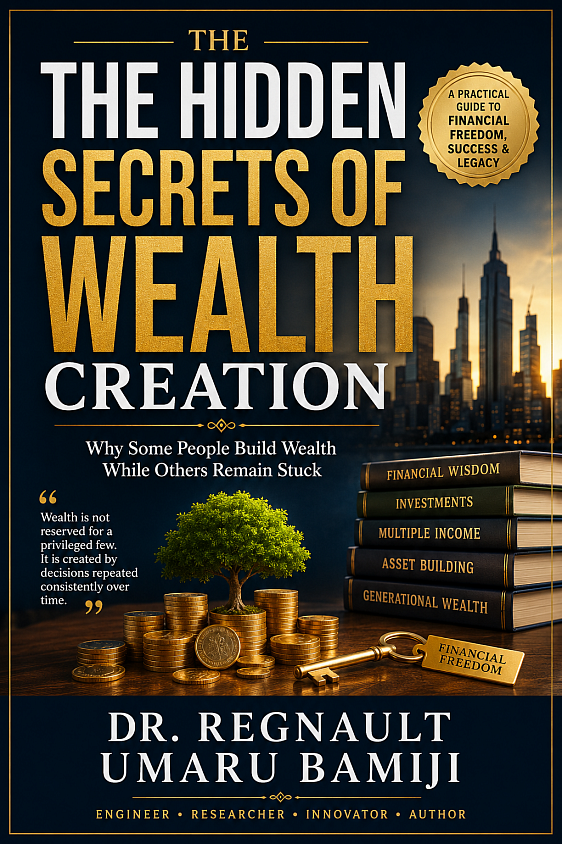
THE HIDDEN RICHES OF WEALTH CREATION
THE HIDDEN SECRETS OF WEALTH CREATIONWhy Some People Build Wealth While Others Remain Stuck
By Dr. Regnault Umaru Bamiji
Have you ever wondered why some people seem to build wealth effortlessly while others struggle financially despite working hard every day?
The answer may not be what you think.
In this powerful and practical guide, Dr. Regnault Umaru Bamiji reveals timeless principles, proven strategies, and life-changing insights that can help you transform the way you think about money, opportunity, success, and wealth creation.
Inside This Book, You'll Discover:
1. Why most people never become wealthy
2. The difference between income and true wealth
3. The psychology behind financial success
4. The habits of self-made millionaires
5. How to build multiple streams of income
6. Practical investment principles
7. How to avoid costly financial mistakes
8. Entrepreneurship and wealth-building strategies
9. Generational wealth secrets
10. A complete 30-Day Financial Transformation Challenge
$14,99
Buy on Amazon
Buy with Paypal bamiji.reign@gmail.com
Buy with Selar
Buy with Flutterwave
ARTIFICIAL INTELLIGENCE FOR ENGINEERS: Practical applications and future opportunities
ARTIFICIAL INTELLIGENCE FOR ENGINEERS: Practical applications and future opportunities
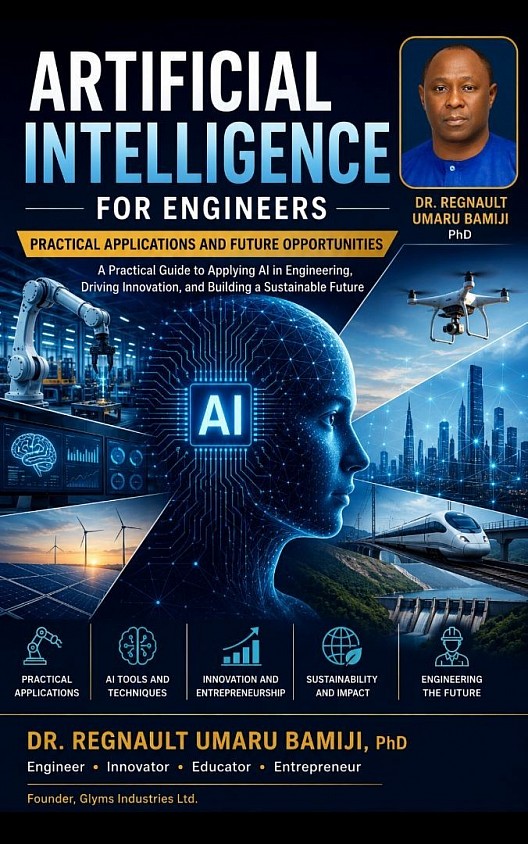
ARTIFICIAL INTELLIGENCE FOR ENGINEERS: Practical Applications and Future Opportunities
Artificial Intelligence is no longer a technology of the future—it is shaping the present and redefining the way engineers solve problems, innovate, and create value.
From healthcare and transportation to manufacturing, aerospace, renewable energy, and industrial automation, AI is transforming industries by enhancing efficiency, reducing costs, optimizing designs, and accelerating decision-making.
As engineers, we stand at the forefront of this technological revolution. Understanding how to leverage AI is becoming as important as mastering traditional engineering principles.
The book, "Artificial Intelligence for Engineers: Practical Applications and Future Opportunities," provides a practical guide to understanding AI and applying it across multiple engineering disciplines. It bridges the gap between theory and real-world implementation, helping engineers harness AI to drive innovation and address complex challenges.
Whether you are an engineering student, practicing engineer, researcher, or technology enthusiast, this book offers valuable insights into the opportunities AI presents today and the possibilities it will unlock tomorrow.
The future of engineering is intelligent, connected, and AI-driven. The question is not whether AI will transform engineering—but how prepared we are to lead that transformation.
$6.99 Buy. PayPal
$6.99 Amazon. (Amazon)
$6.99 Buy. (Selar)
$6.99 flutterwave
#ArtificialIntelligence #AI #Engineering #Innovation #MachineLearning #RenewableEnergy #IndustrialAutomation #Manufacturing #AerospaceEngineering #Industry40 #Technology #EngineeringLeadership #DigitalTransformation #FutureOfEngineering #GlymsIndustries
DIVINE ALIGNMENTS FOR SUCCESS
Divine Alignments for Success
Get a Copy: buy from Amazon, PayPal or Selar below:
Amazon. $5.20
PayPal. $5.20
Selar. $5.20
Flutterwave $5.20
Book overview
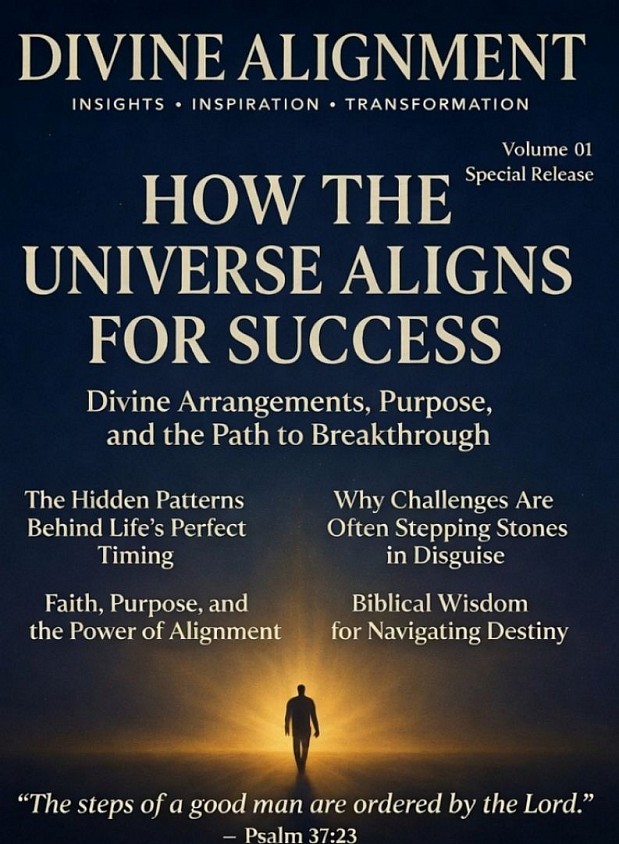
HOW THE UNIVERSE ALIGNS FOR YOUR SUCCESS: Through Divine Arrangements
What if success isn’t something you chase… but something you align with?
Most people are taught that effort is everything—push harder, plan better, never stop. Yet life has a way of revealing something more subtle: timing matters, direction matters, and sometimes the right path feels less like forcing and more like flowing.
That is the idea behind How the Universe Aligns for Your Success—a thought-provoking eBook that challenges the belief that achievement is purely a product of struggle.
This is not another “hustle harder” guide.
It is a deeper reflection on why some efforts multiply while others collapse, even when they are equally well executed.
Through grounded insight and timeless principles drawn from human experience, the book explores how intention, discipline, character, and purpose begin to work together when they are in alignment with something greater than sheer willpower.
Inside, you will discover perspectives on:
Why resistance is not always rejection
How redirection can be a form of protection
The hidden role of timing in success
What it means to act with alignment instead of force, How clarity of purpose changes the outcomes of effort
This book doesn’t ask you to abandon logic or ambition. It asks you to refine them—so that effort is no longer blind, but directed.
If you’ve ever worked hard and still felt something wasn’t “clicking,” this eBook offers a different lens—one that may change how you interpret struggle, opportunity, and progress.
Stop forcing what resists. Start recognizing what aligns.
How the Universe Aligns for Your Success is now available for readers ready to see achievement differently—not just as something earned, but something intelligently arranged.
Energy Review; Rethinking Physics
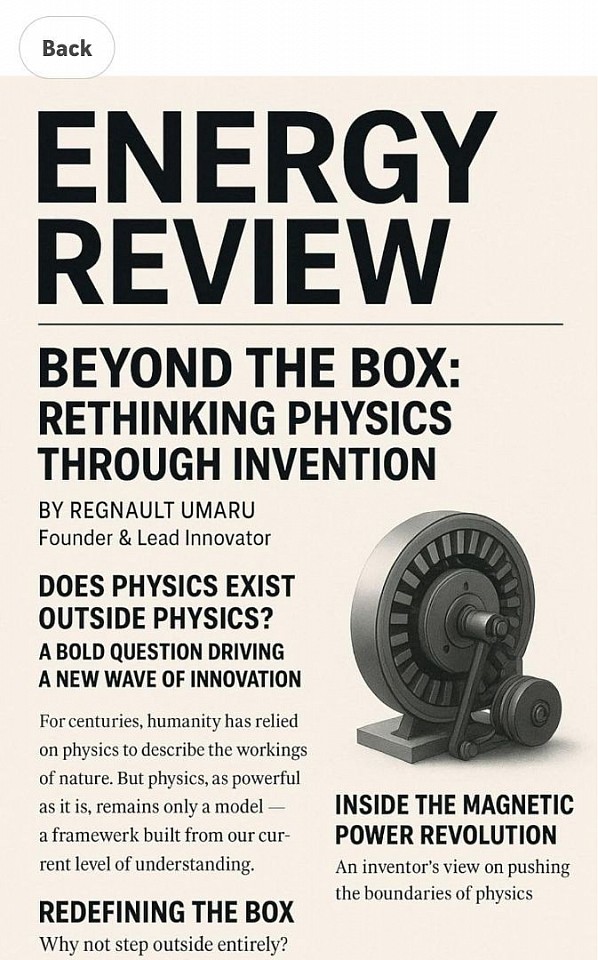
ENERGY REVIEW: RETHINKING PHYSICS OUTSIDE THE BOX
Buy this book on Amazon $5.00
Click to buy AMAZON
Does Physics Exist Beyond Physics?
Physics is our best description of nature—but it is not nature itself. Throughout history, major breakthroughs have emerged before science could fully explain them. From Faraday’s electromagnetic discoveries to the Wright brothers’ first flight, invention often came first, and theory followed.
At Glyms Industries Ltd., we explore this frontier through advanced magnetic energy systems, including magnet-driven rotational platforms and magnetically assisted power generators. Our work does not seek to break the laws of nature—it seeks to uncover behaviors and possibilities that current models may not yet fully explain.
Every experiment expands understanding. Every prototype raises new questions. Innovation begins where accepted limits are challenged.
Our mission is simple:
• Explore the unknown
• Build what has not been built
• Understand what has not yet been explained
We are not trying to escape physics—we are helping to expand it.
Glyms Industries Ltd.
Where imagination meets experimentation, and innovation becomes reality.
